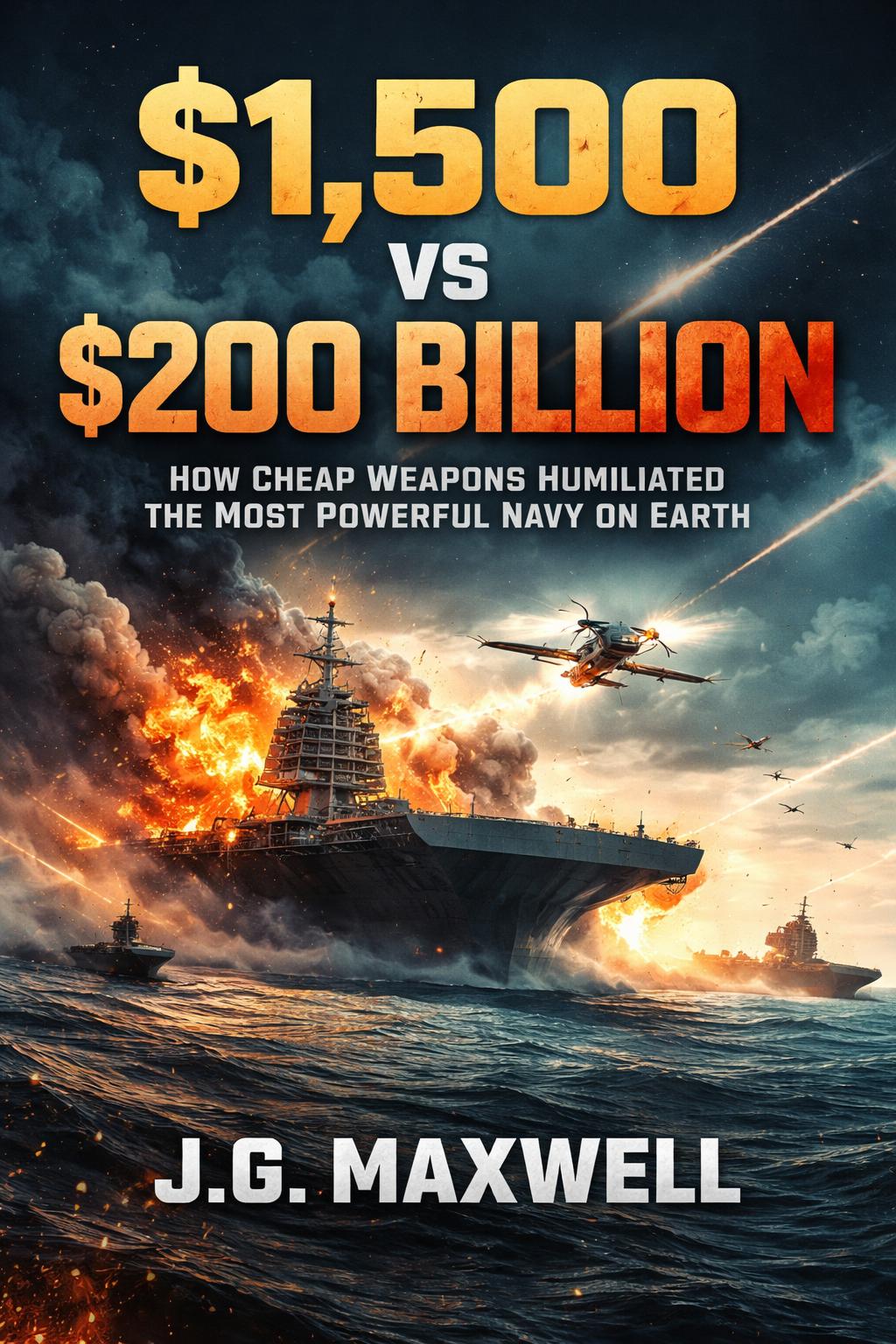
“$1,500 vs $200 Billion: How Cheap Weapons Humiliated the Most Powerful Navy on Earth”
$37.00$27.00
This book is not just the story of how a navy was destroyed.
It is the story of what happened after.
It is about the gap between winning battles and controlling outcomes. It is about the uncomfortable reality that technological superiority does not guarantee strategic success. And it is about a question that sits at the center of modern warfare—a question that governments, militaries, and policymakers would prefer not to answer openly:
What happens when the most advanced weapons in the world collide with the simplest ones—and the simple ones refuse to disappear?
For decades, military power has been measured in terms of scale: the number of ships, the sophistication of aircraft, the precision of missiles, the size of defense budgets. The assumption has always been clear. More advanced means more powerful. More powerful means more control.
This war challenged that assumption.
Not by defeating advanced systems outright, but by sidestepping them. By forcing them into situations where their strengths became limitations. By turning cost into a weapon, and persistence into a strategy.
The result was not a clean victory or a clear defeat.
It was something far more complicated—and far more relevant to the future.